
Built for the African field, and what that means.
The phrase is easy to put on a brochure. Here is what it covers in the code, in the hosting, and in the way we work with you.
A page that is not waiting on anyone.
Most management applications load their fonts from one supplier, their icons from another, their mapping from a third and a tracker from a fourth. On a mobile link running at 200 kbit/s at the end of a track, each of those dependencies is a chance to display nothing at all.
System fonts
No font downloaded. Text appears on the first frame, in a typeface already present on the device.
Embedded icons
Drawn in the page itself. No icon file to wait for, no empty squares for ten seconds.
Self-hosted mapping
The map library is served by your own server. No interface key, no quota, no metered billing.
No tracker
Neither on this site nor in the platform. Nothing slowing the page down to measure how your teams behave.
Photographs compressed at capture
Intervention photographs are reduced on the phone before upload. A technician should not have to choose between documenting the job and burning his data.
Light pages by principle
The weight of each screen is a design constraint, not an optimisation done afterwards when somebody complains.
And when there is nothing at all
Field mode works out of coverage: procedure, readings, photographs and the signature on the order all happen with no network, and everything syncs on reconnection.
The trip is the real cost.
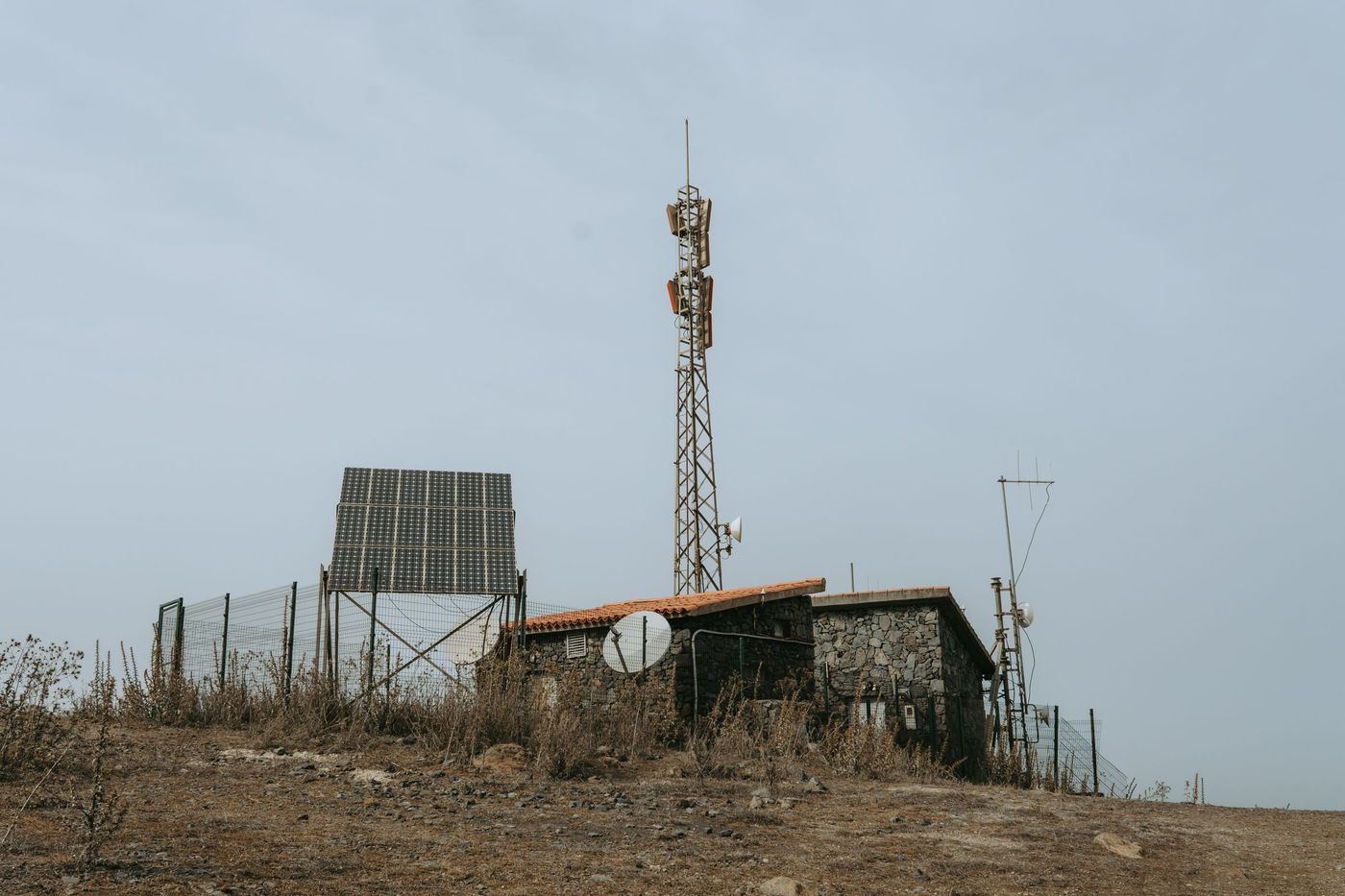
On a dense European network, a wasted visit costs an hour. On a network where sites are three hours down a track, it costs a team-day, a tank of fuel and a contractual deadline. The whole design follows from that.
- Access instructions are shown before departure, not discovered at the gate
- Part availability is known at the moment of assignment
- The map is used to group nearby visits into one trip
- Site history avoids redoing a diagnosis already made last year
- Recording happens on site, while the equipment is still open
One organisation, separate entities.
A company operating in four or five countries does not have four or five pieces of software. It has one platform where each entity sees its own scope and head office sees everything, without a branch manager being able to read the neighbour’s portfolio.
The partition is in the foundations
It does not rest on a display filter you can get round by editing an address. Scope is enforced at the data source.
Shared reference data
Equipment classes and procedure sets can be common to the whole organisation, while customers and sites stay specific to each entity.
Consolidation that means something
Management compares entities that measure their deadlines the same way. That is the condition for the comparison to be more than a spreadsheet.
“A French publisher, at a distance.”
It is a legitimate objection and we would rather answer it than dodge it. Here is our answer, plainly.
-
The software does not depend on us to run
It runs on an instance and a database dedicated to you. If we disappeared tomorrow, your data would still be yours, in a standard exportable format, and another provider could take over: nothing proprietary locks the platform in.
-
What changes day to day is set without us
Statuses, types of work, procedures, customers, contractual deadlines, document templates, accounts and permissions: all of it is in the settings.
-
Support runs on the channel you already use
Instant messaging, telephone, video call, during your hours, not a ticket portal with a reply within five working days.
-
Go-live happens with your teams, not instead of them
An administrator on your side is trained to own the configuration. The aim is that you do not have to call us to change a status. The detail of getting started.
See the platform run on your own cases
An hour is enough: you open a request, assign it, close it and print the signed work order. Then we look at how your operation fits in: your customers, your sites, your contractual deadlines.